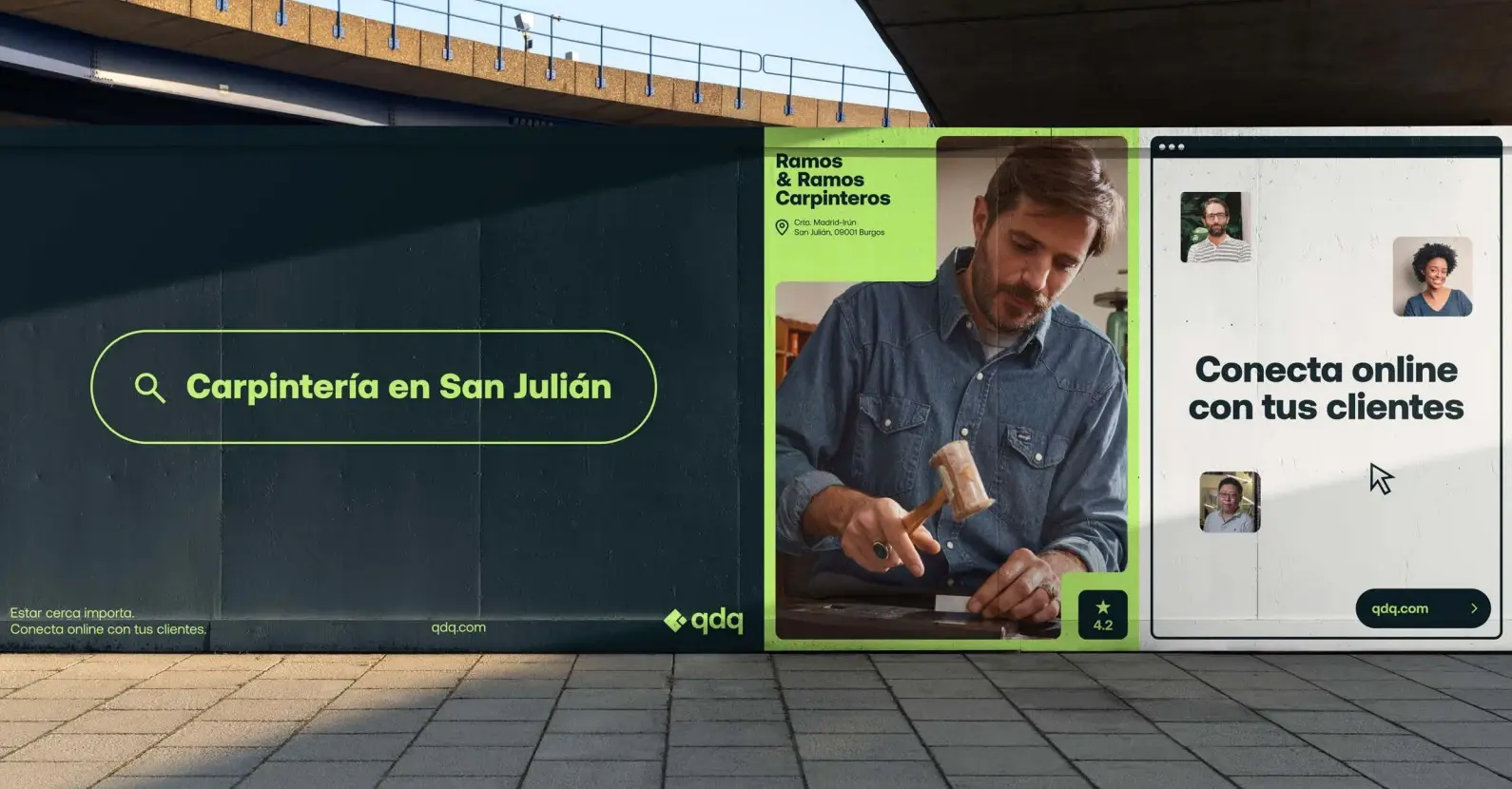
qdq's AI website builder using three data points, featured at MWC 2024
Impact: MWC 2024, sold to partners
Stack
- Figma
- Miro
- OpenAI/ChatGPT
- eformless
- GA4
Project overview
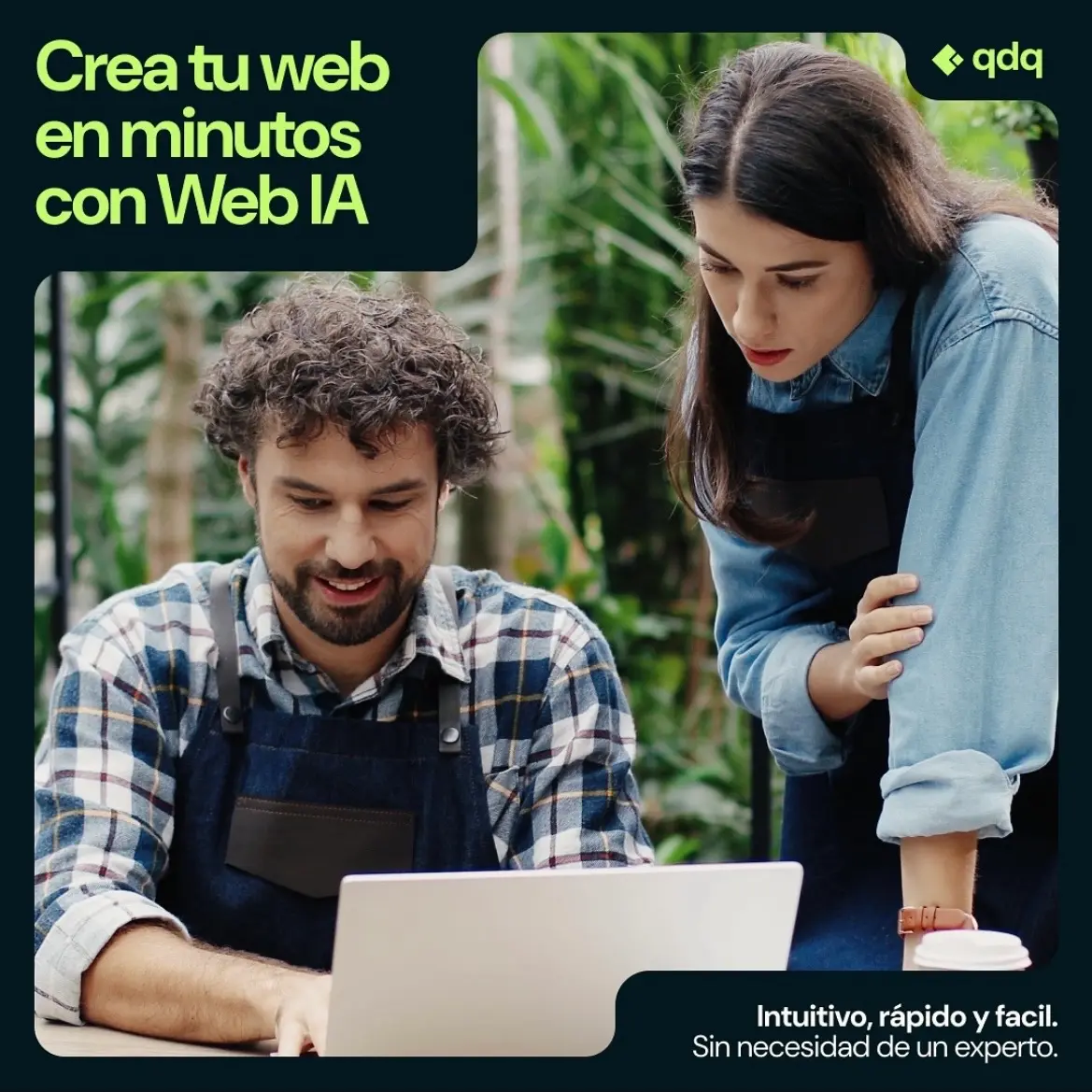
Freelancers and small businesses without a digital presence face a simple problem: building a website is slow, expensive, and requires technical knowledge they don't have. This AI-powered tool generates a complete site (copy, images, and structure) from just three data points. A real product in production, presented at Mobile World Congress 2024.

Challenge
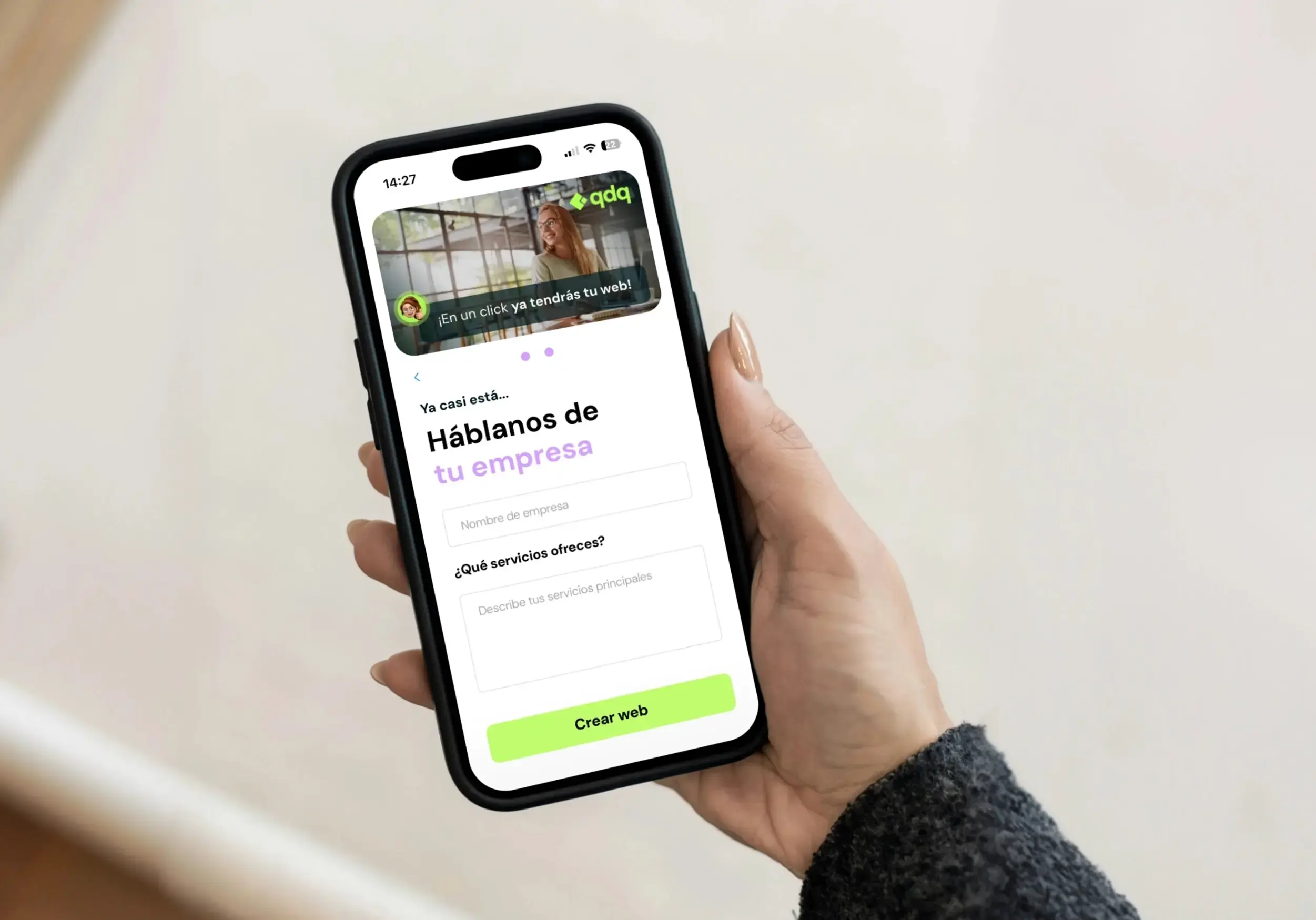
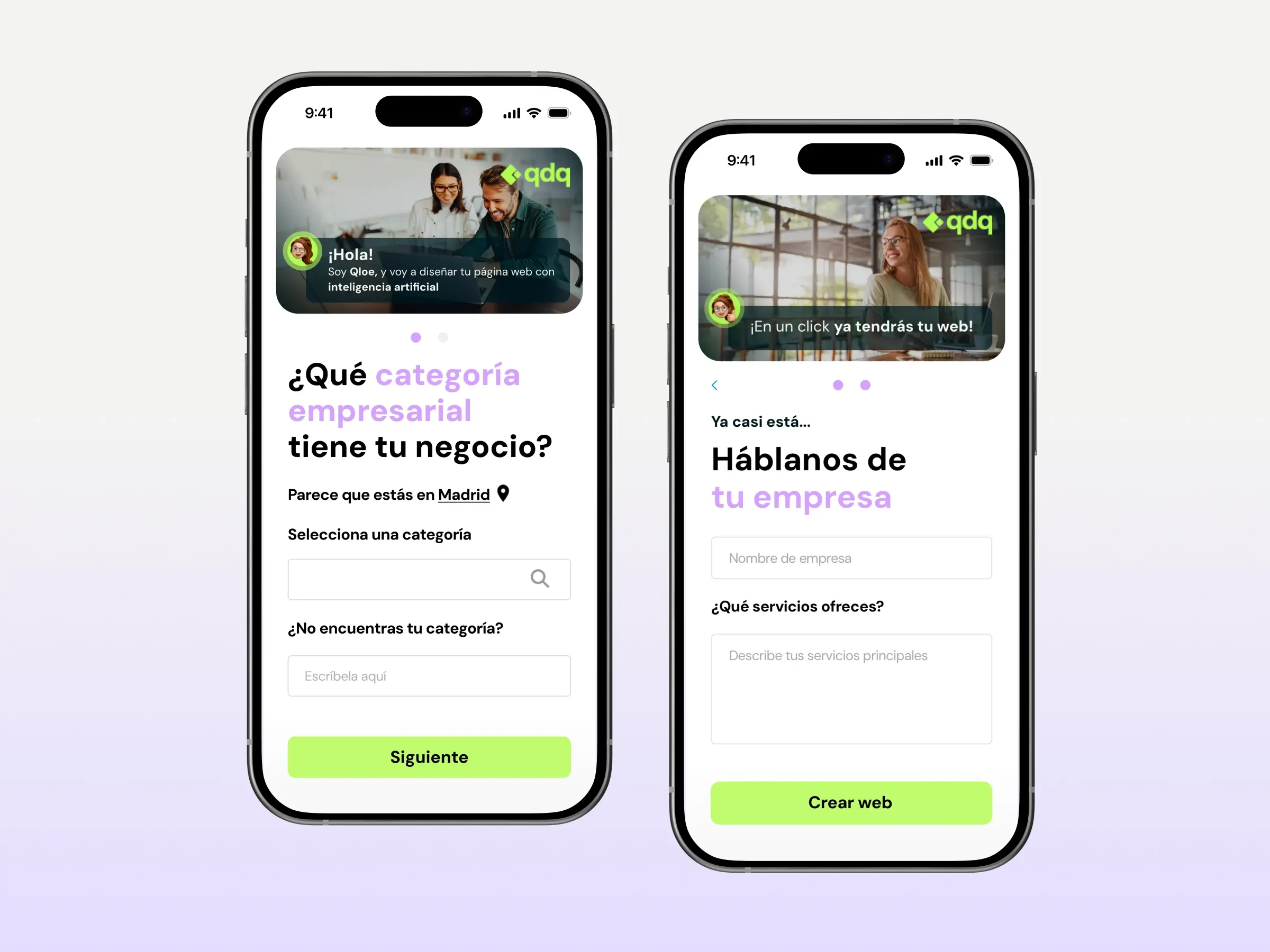
Creating a website requires time, money, and technical skills that most freelancers don't possess. Existing tools are either too complex or require extensive manual configuration. The goal was to reduce this process to minutes, three input fields, one website ready to publish.
My Role · Product Design UX/UI · Feature definition, interface design, internal usability testing, in collaboration with the development team.
Objectives
Business Objectives
- Increase product activation rates.
- Reduce the generation funnel time.
- Scale the product as a white-label model for third parties.
- Freemium model: free trial, publishing from €5-6/month.
User Objectives
- Generate a website without technical knowledge.
- Obtain a clean, business-tailored result in minutes.
- Easily edit the result without external help.
- Maintain an active digital presence without investing significant time or money.
1. Exploration & Context
- Targeted at freelancers and small businesses with no digital presence or technical background.
- Analyzed no-code tools and web generators to identify simplification opportunities.
- Coordinated with development to ensure the AI (ChatGPT) returned structured results consistent with the design.
- Defined business categories, image types, and copy structures per template.
2. Flow Design & Initial Decisions
The biggest challenge was coordinating with developers to ensure the AI returned coherent results based on design definitions.
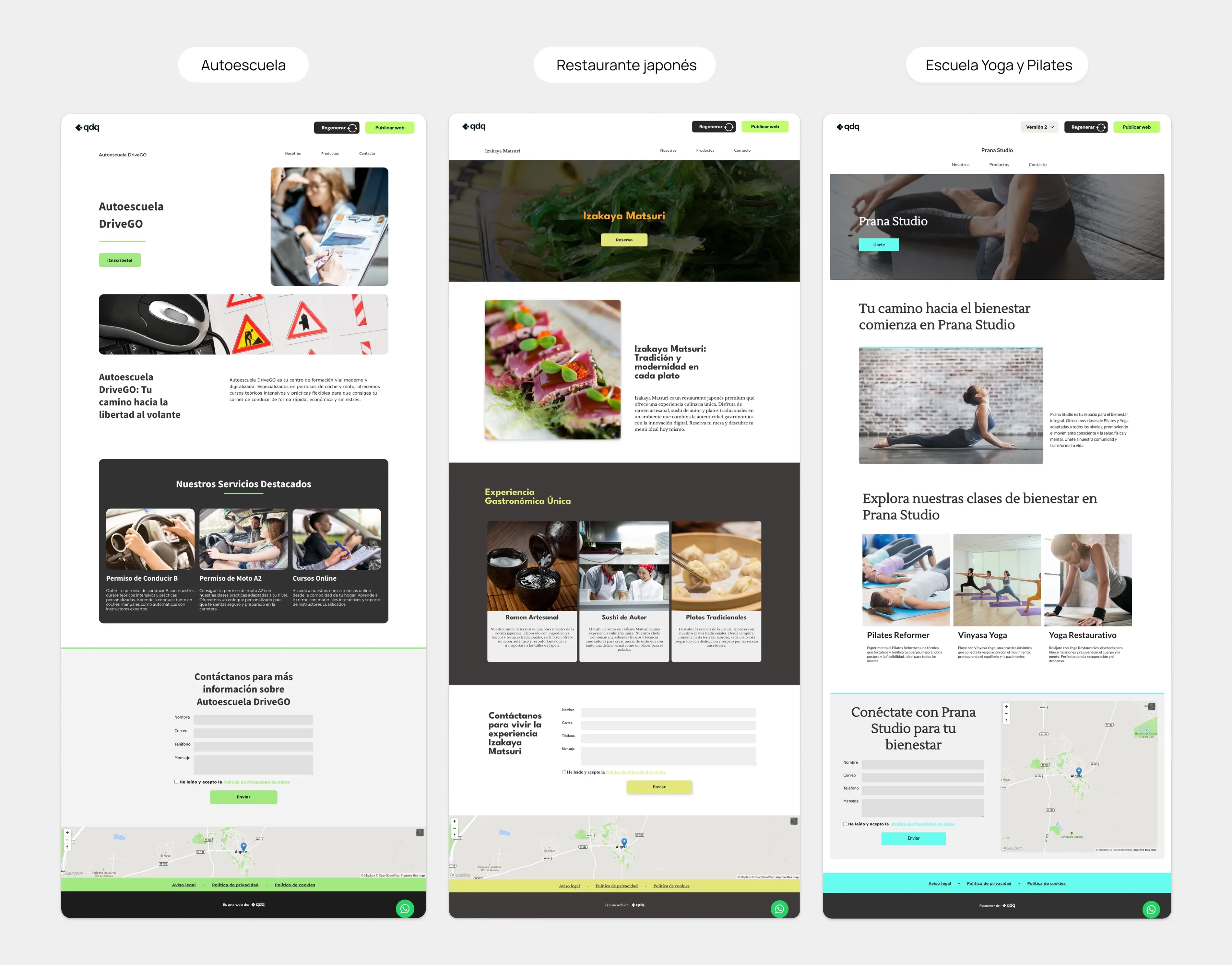
We worked template-by-template to provide a solid foundation for the AI to generate content in each section.
Business categories, color ranges by sector, and image types were precisely defined to ensure the generated output was always relevant.
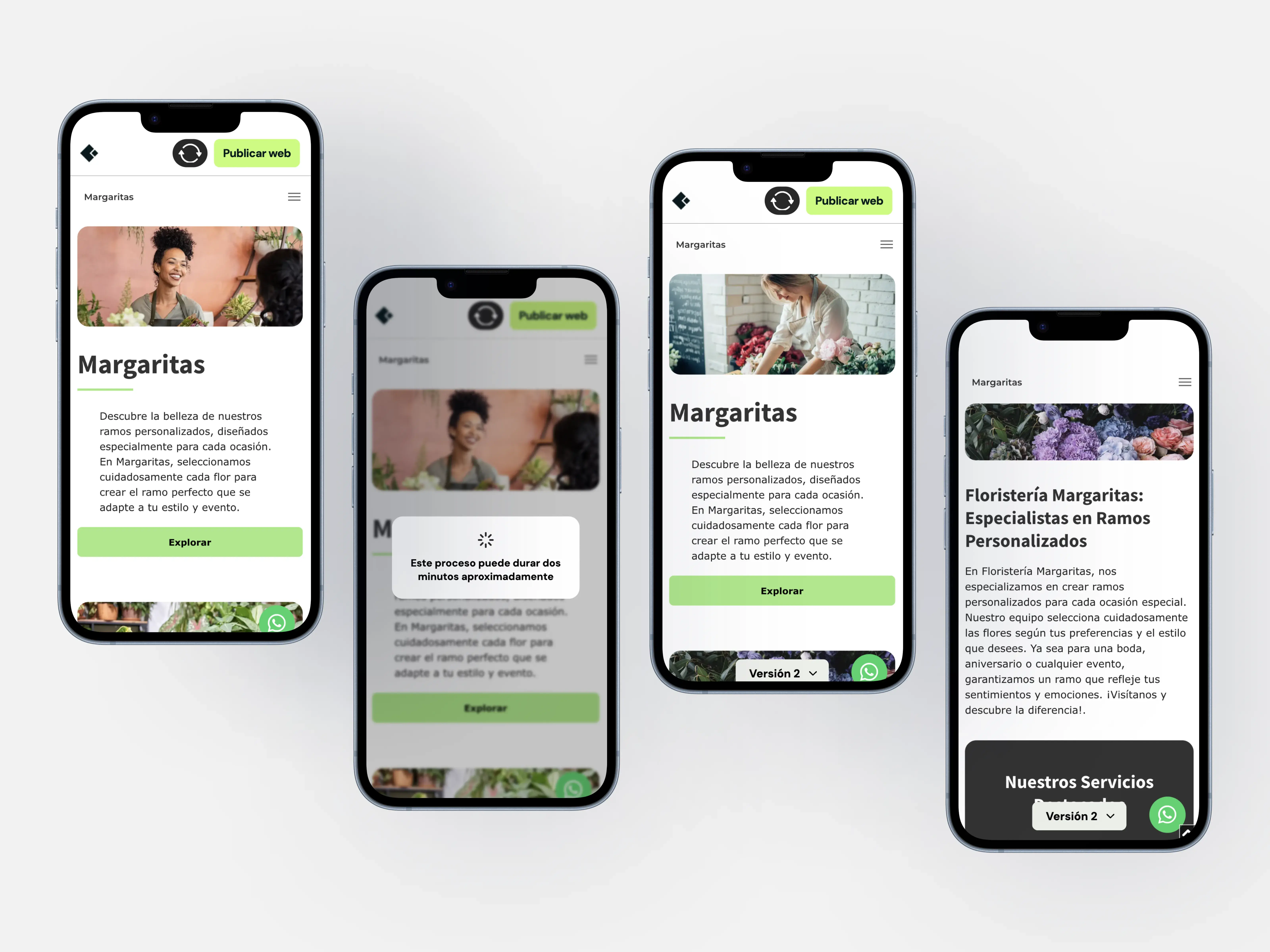
Users could regenerate up to twice or edit the content directly if they weren't satisfied.
| Identified Problem | Design Decision | Expected Impact |
|---|---|---|
| High drop-off rate on the first screen (detected via analytics) | Removed intro screen: reduced flow from 3 to 2 steps | Direct improvement in funnel completion rate |
| Users didn't know how to edit their site via the CMS (Duda) | Integrated editing guide added to the activation flow | Reduced post-generation friction and support calls |
| Break in the flow: publishing was required before editing, but not signaled | Added a visible "Publish" button at the top | Linear flow with zero screen abandonment |
| Product was difficult to sell as a standalone | Created a dynamic brand component adaptable by partner | Scalability: marketed to partners like CE Consulting and AECEM |
3. Key Iterations
- Analytics-driven: Dropped the welcome screen after detecting a massive bounce rate, streamlining the flow to just 2 screens.
- Usability-driven: Added an integrated editing manual within the flow after realizing users struggled with the CMS (Duda) post-generation.
- Flow-optimization: Signaled the "Publish" action clearly to avoid the previous bottleneck where users felt stuck before being able to edit.
4. Scalability
The side brand block was designed as a dynamic component, allowing partners to swap colors, images, and logos without a total redesign.
Successfully commercialized with partners such as CE Consulting and AECEM.
a) Key Deliverables
Presented at MWC 2024 to hundreds of attendees who completed the flow live, the product proved that just three data points are enough to generate a ready-to-publish website. The conversion funnel was reduced from 3 to 2 screens based on real data analysis, and post-generation friction was resolved through an integrated guided flow. The dynamic brand component allowed the product to scale across partners such as CE Consulting and AECEM.
b) Design Learnings
Designing an AI-driven product forces you to think about output constraints, not just user inputs. The most critical decision wasn't about the interface, but coordination: precisely defining business categories, color palettes, and image types so the AI generated output consistent with the design system. What seemed like a development issue was actually a system design challenge. It also confirmed that analytics are non-negotiable, a high-bounce welcome screen was the exact signal that unlocked the funnel's most significant improvement.
c) Next Steps
- Conduct formal usability testing with real freelancers to identify friction points that quantitative analytics miss.
- Explore progressive customization: allowing users to adjust color palettes, typography, and copy tone without leaving the generation flow.
- Develop a post-publishing metrics dashboard so users can track their website's performance directly within the platform.
Outcome
Presented at MWC 2024: attendees completed the flow live and praised the speed of the results. Funnel reduced from 3 to 2 screens based on data analysis. Major post-generation friction solved via an integrated guide. Scalable product actively marketed and sold to partners.